The procurement of a self-loading concrete mixer represents a pivotal capital investment for construction enterprises in Ethiopia, transcending a simple equipment purchase to become a strategic decision impacting cash flow, project agility, and competitive positioning. The central question of affordability, particularly regarding a prominent global manufacturer like AIMIX, demands a nuanced analysis that extends far beyond the initial invoice price. True fiscal assessment requires a holistic dissection of the Total Cost of Ownership (TCO), a rigorous evaluation of the brand’s localized value proposition against Ethiopia’s unique operational and infrastructural landscape, and the construction of a dynamic financial model that quantifies both tangible returns and strategic advantages. This examination moves past superficial price tags to interrogate the economic viability of integrating AIMIX machinery into the fabric of Ethiopia’s burgeoning construction sector, where reliability, operational independence, and lifecycle cost control are paramount.
## Deconstructing the Total Cost of Ownership
Affordability is a function of total expenditure over the asset’s operational life, not merely its purchase price. The TCO framework for a self loading concrete mixer in Ethiopia incorporates three primary financial layers. The first layer is upfront acquisition and logistics, encompassing the ex-works price, international freight to Djibouti, port clearance charges, overland transport to final destination, and import duties under Ethiopia’s prevailing tariff regime. This figure can vary significantly based on the chosen model’s capacity, engine type, and optional features. The second, and often most underestimated layer, is operational and maintenance expenditure. This includes daily fuel consumption rates—a critical metric given local fuel prices and availability—costs of wear parts like mixing blades and loading shovel teeth, hydraulic fluids, filters, and planned servicing. The availability and cost of genuine spare parts within Ethiopia, or the lead time for international orders, directly influence machine uptime and project continuity. The final layer pertains to residual value and economic longevity. A robustly constructed mixer that maintains operational integrity and a higher resale value after five years presents a different economic profile than a cheaper unit requiring major overhaul or possessing negligible secondary market value. The TCO model must amortize all these costs over the estimated cubic meters of concrete produced, providing a true cost-per-unit metric that forms the basis of any affordability analysis.
## AIMIX in the Ethiopian Context: A Value Proposition Analysis
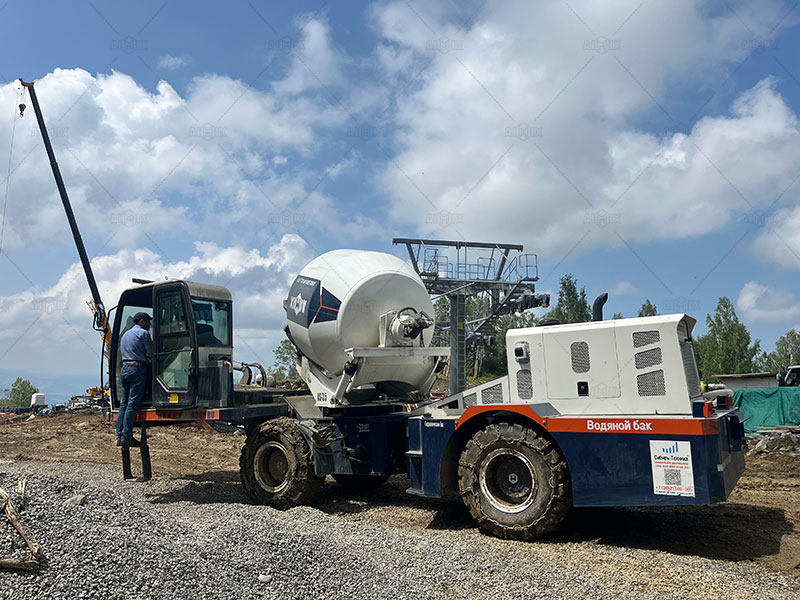
AIMIX’s affordability in Ethiopia cannot be assessed in a vacuum; it must be evaluated against the specific demands and constraints of the local market. The analysis begins with product portfolio alignment. AIMIX offers a range of self-loading mixers, from compact 1.2 cubic meter models suited for narrow urban sites to larger 4.5 cubic meter units for infrastructure projects. Affordability, in this sense, is tied to selecting a machine whose capacity and features—four-wheel drive capability, engine power, water tank capacity—precisely match typical project scopes and local material aggregate sizes, avoiding the financial burden of over-specification or the operational insufficiency of an under-powered model. The most critical component of the value proposition is after-sales support infrastructure. A favorable initial concrete mixer price in Ethiopia is swiftly negated by a machine immobilized for weeks awaiting a proprietary part. Therefore, the presence and competency of a local AIMIX dealer or service partner in Addis Ababa or other major hubs, their in-country parts inventory, and the training level of their technicians are non-negotiable factors that subsidize long-term operating costs and protect the investment.
Furthermore, the available financing and procurement pathways directly impact perceived affordability. Does AIMIX or its local representative offer structured financing plans, lease-to-own options, or partnerships with local financial institutions? For many Ethiopian contractors, the ability to secure favorable payment terms that align with project milestone payments can make a higher-quality, more reliable unit more accessible than a cash purchase of a lesser machine. The brand’s willingness to adapt its offerings—perhaps by supporting the procurement of commonly worn parts through local manufacturers or providing extensive operator training in local dialects—signals a commitment to reducing the operational cost burden for the end-user. This ecosystem of support is an intrinsic part of the product’s value and a direct contributor to its lifecycle affordability.
Strategic Acquisition: Building a Financial Justification Model
The final determination of affordability requires translating qualitative value into quantitative justification. This involves building a proactive financial model centered on the mixer’s revenue-generating potential. The model must start by calculating a clear break-even point and Return on Investment (ROI) timeline. Inputs include the total capitalized cost (TCO over a defined period), estimated daily production output, and the local market rate for ready-mix concrete or the cost savings from in-house production versus outsourcing. The self-loader’s unique value of operational autonomy—its ability to mix and place concrete on-demand in remote or congested sites without reliance on transit mixers and batching plants—allows for the incorporation of premium pricing or accelerated project timelines into the revenue model, directly enhancing ROI.
Prudent budgeting must also integrate comprehensive risk mitigation and contingency reserves. A minimum of 10-15% of the machine’s purchase price should be allocated to an annual maintenance and repair reserve. The model should simulate scenarios such as a 20% increase in fuel costs or a critical component failure, testing the financial resilience of the investment. The affordability verdict for an AIMIX self-loading mini concrete mixer machine in Ethiopia, therefore, emerges from this synthesis. It is a balance between its absolute cost and its demonstrable capability to generate profit, reduce external dependencies, and accelerate project delivery. For a contractor with a steady pipeline of appropriate projects, the higher initial investment in a well-supported, reliable brand like AIMIX, when spread over a lower cost-per-cubic-meter and longer service life, often proves more economically sound than a lesser expenditure on equipment that compromises productivity, inflates operational costs, and introduces unacceptable project risk. True affordability is measured in consistent returns and reduced financial volatility, not just the initial outlay.
Comments
No comments yet. Be the first to react!