The management of urban noise pollution is a critical facet of modern civil engineering and public health. While traditional approaches often rely on barrier walls and insulation, an increasingly sophisticated method leverages the inherent properties of processed mineral aggregates. The specific gradation of crushed gravel—the precise distribution of particle sizes from fines to coarse fragments—plays a deterministic role in the acoustic performance of materials used in the urban fabric. This is not a passive characteristic but an engineered outcome, directly influenced by the selection and configuration of gravel crushers. Jaw crushers, cone crushers, and vertical shaft impactors each impart distinct geometric and textural qualities to the aggregate, which in turn govern how sound waves interact with a surface. Through deliberate processing, crushed stone can be tailored to enhance sound absorption, promote scattering, and contribute significantly to acoustic mitigation strategies.
## The Acoustical Mechanism: Porosity, Tortuosity, and Sound Energy Dissipation
The primary acoustical benefit of properly graded crushed aggregate lies in its capacity to create a highly porous, interconnected matrix. When sound waves encounter a dense, impervious surface like standard asphalt or concrete, a significant portion of the energy is reflected. A layer composed of a precisely graded aggregate, however, presents a labyrinth of interstitial voids and channels. The particle size distribution is key; a well-graded mix containing a range of sizes from sand up to 20mm or 25mm stone packs in a way that creates a network of air-filled pores rather than a solid mass. As sound waves enter this matrix, the phenomenon of tortuosity—the winding, irregular path through the pores—causes friction between the air particles and the vast surface area of the aggregate.

This friction converts acoustic energy into negligible amounts of heat, effectively dissipating the sound. The angularity and surface texture of the aggregate, largely determined by the crushing mechanism, amplify this effect. Cubical particles produced by a well-configured mobile cone crusher or an impact crusher pack less densely than rounded, weathered gravel, creating more void space. Furthermore, their fractured, rough surfaces increase the frictional interface with air molecules compared to smooth, river-worn stone. The crushing process, therefore, is an exercise in micro-scale geometry design, where the machine’s settings and chamber profile are adjusted to yield particles that optimize this energy-dissipating porosity.
## Strategic Gradation for Targeted Noise Mitigation
Not all noise is equivalent; it occupies a spectrum of frequencies. The strategic blending of different gravel sizes allows engineers to target specific problematic frequency bands common in urban environments. Low-frequency noise, such as the rumble from truck engines or heavy machinery, possesses longer wavelengths and greater energy. Mitigating these sounds requires structures with deeper void networks, often facilitated by a higher proportion of larger, single-sized coarse aggregate (eg, 20-25mm) that creates macro-pores. The sound waves can penetrate deeper into the matrix, where the extended path length ensures sufficient friction and energy loss occurs.
Conversely, high-frequency noise from tire-on-pavement interaction, brakes, and general traffic has shorter wavelengths. This is effectively addressed by a higher concentration of fine aggregates and crusher dust within the gradation. These smaller particles create a greater density of smaller pores and an exponentially larger total surface area, which is highly effective at scattering and absorbing higher-pitched sounds. The most effective acoustic aggregates are neither uniformly fine nor uniformly coarse, but exhibit a continuous, optimized gradation. This creates a multi-scale pore structure, from macro-pores between large stones down to micro-pores between fines, enabling broadband acoustic absorption across the frequency spectrum most detrimental to urban livability.
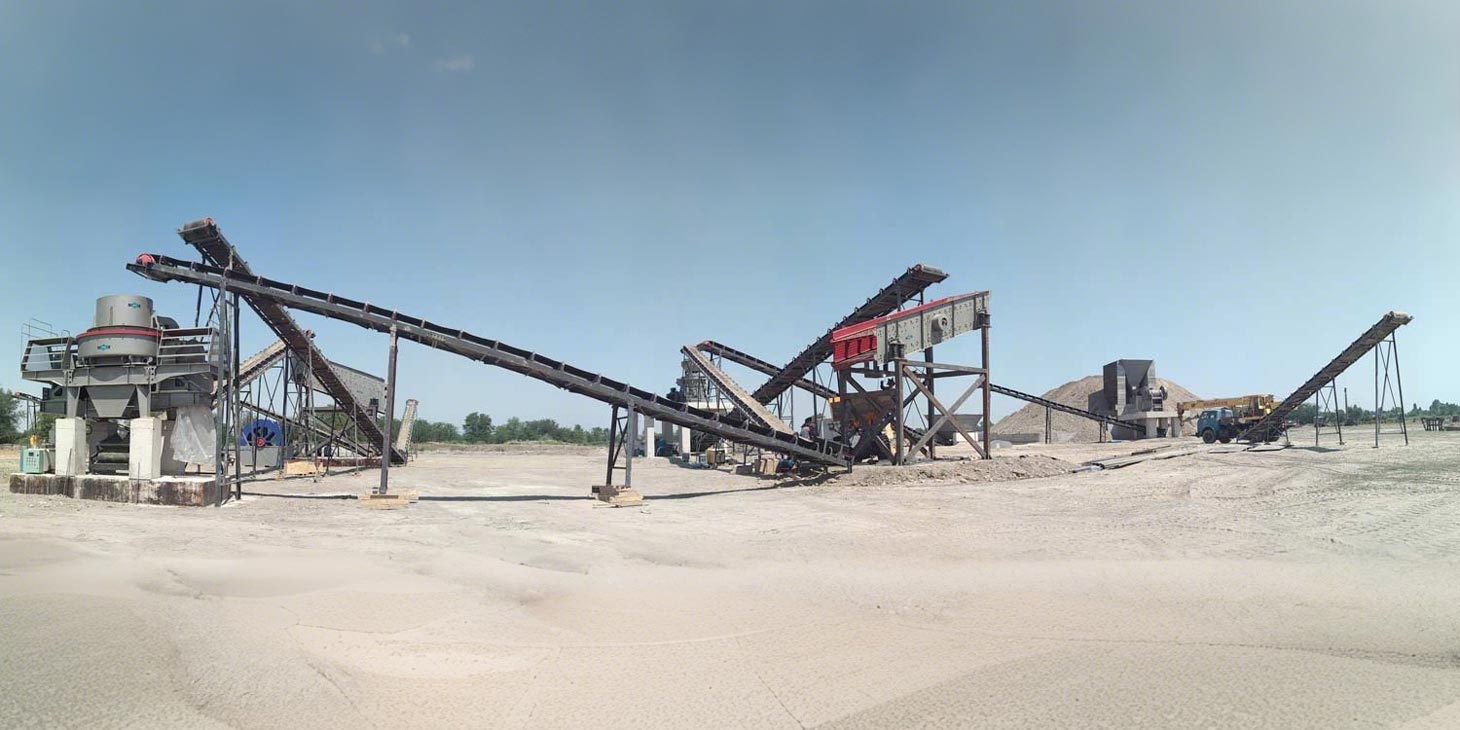
## Engineering Applications: From Porous Asphalt to Acoustic Berms
The practical application of acoustically engineered aggregates is realized in several key urban infrastructure elements. The most direct application is in porous asphalt or open-graded friction course (OGFC) pavements. These mixes are specifically designed with a gap-graded aggregate structure—intentionally missing middle-sized particles—to create a high-void content, typically 18-22%. When a specialized crushing circuit produces the aggregate for this mix, ensuring high cubicity and a clean, fractured surface is paramount to maintain pore connectivity and prevent clogging. The result is a road surface that allows tire noise and spray water to penetrate into its depth, where the sound is dampened and the water is drained away, simultaneously reducing traffic noise and improving wet-weather safety.
Beyond pavements, crushed aggregate is the fundamental component in non-porous acoustic solutions. Sound-barrier walls, often constructed as earth berms or retained rock walls, utilize densely packed, durable crushed stone as their core mass. The weight and density provided by the aggregate are the primary factors in reflecting and blocking sound transmission. Here, the crushing process focuses on producing a high-strength, durable product that will not degrade or settle. Furthermore, loose, crushed stone layers are used as landscape buffers along railways and highways. These granular layers function as superficial absorbers and scatterers, attenuating ground-borne vibrations and airborne noise before it reaches adjacent properties. In each case, from the whisper-quiet road surface to the monolithic noise barrier, the initial act of crushing and sizing the gravel establishes the foundational acoustic properties that define the structure’s performance, making the stone crushing plant a crucial first link in the chain of urban soundscape management.

Comments
January 12, 2026 14:54
That is thus gorgeous and also imaginative. I recently really like the particular shades and also anyone who receives that inside the email will probably be beaming. 강남가라오케
January 14, 2026 13:56
Everything has its value. Thanks for sharing this informative information with us. GOOD works! 강남쩜오
January 17, 2026 09:48
erjiikk90xcvg,o
Hello I am so delighted I located your blog, I really located you by mistake, while I was watching on google for something else, Anyways I am here now and could just like to say thank for a tremendous post and a all round entertaining website. Please do keep up the great work. 일산하이퍼블릭
January 18, 2026 10:09
erjiikk90xcvg,o
Thank you so much as you have been willing to share information with us. We will forever admire all you have done here because you have made my work as easy as ABC. 대구룸싸롱
January 22, 2026 13:39
the nation’s certainly fabulous web log. the nation’s realy informative together with a a great decent project. i want it. UC Berkeley Deportes Español
January 24, 2026 09:14
While some bonus codes at 1xBet are tailored for existing customers and may be applied during gameplay, the code for registration — 1XLUNE — is strictly tied to the welcome campaign. Unlike ongoing codes that appear in the Promo Code Store or loyalty promotions, this particular code is linked to first-time account activity and comes with set terms. 1xbet promo code list kenya
January 26, 2026 12:06
Concerning a short while ago going your site, the information you actually give on this site includes made it simpler for people considerably. With thanks to get your complete time frame & deliver the results. iptv kopen
January 28, 2026 12:02
The audio will be awesome. You might have several extremely skilled performers. My partner and i want an individual the most effective regarding accomplishment. 강남도파민
February 1, 2026 12:49
Thanks For sharing this Superb article.I use this Article to show my assignment in college.it is useful For me Great Work. sign up bonus sportsbook
February 8, 2026 14:15
Helpful resource — I joined a server after reading multiple player testimonials here. Community warmth and active forums made the difference. Real rankings matched my positive experience. polototo Fair, fun rewards encourage continued participation. Real player reviews confirmed satisfaction. situs toto Excellent roundup — I found a friendly server with low entry barriers thanks to these reviews. Inclusive communities make the game enjoyable for everyone. Real player rankings reflected welcoming attitudes. toto macau These outfits sound bold, sleek, and perfectly tailored. The second-skin fit is a major advantage. Personalized designs add uniqueness. Fast worldwide delivery makes it easy to order. slot gacor Helpful resource — I joined a server after reading multiple player testimonials here. Community warmth and active forums made the difference. Real rankings matched my positive experience. bandar togel Fair, fun rewards encourage continued participation. Real player reviews confirmed satisfaction. slot online
February 10, 2026 08:51
Wonderful article. Fascinating to read. I love to read such an excellent article. Thanks! It has made my task more and extra easy. Keep rocking. Student moving service
February 11, 2026 11:57
Great roundup — I found a server with excellent lore and RP communities. Immersive storytelling made leveling more enjoyable. Real votes supported the vibrant RP scene. Nagaspin99 Very informative — the server comparison on event rewards was useful. Nagaspin99 Very useful — the listing of server reseller policies clarified trustworthy partners. Avoiding shady resellers protects both players and server integrity. Real votes flagged reputable servers. Nagaspin99 Personalized latex fashion truly elevates style. Full-size customization ensures comfort and confidence. The glossy material looks premium. Global delivery in just 20 days is fantastic. Nagaspin99